{{ 'fb_in_app_browser_popup.desc' | translate }} {{ 'fb_in_app_browser_popup.copy_link' | translate }}
{{ 'in_app_browser_popup.desc' | translate }}
Village Roots Report 02 | Yanpu, Pingtung – Jin You-Ming Organic Farm
The Fruit That Brings Happiness
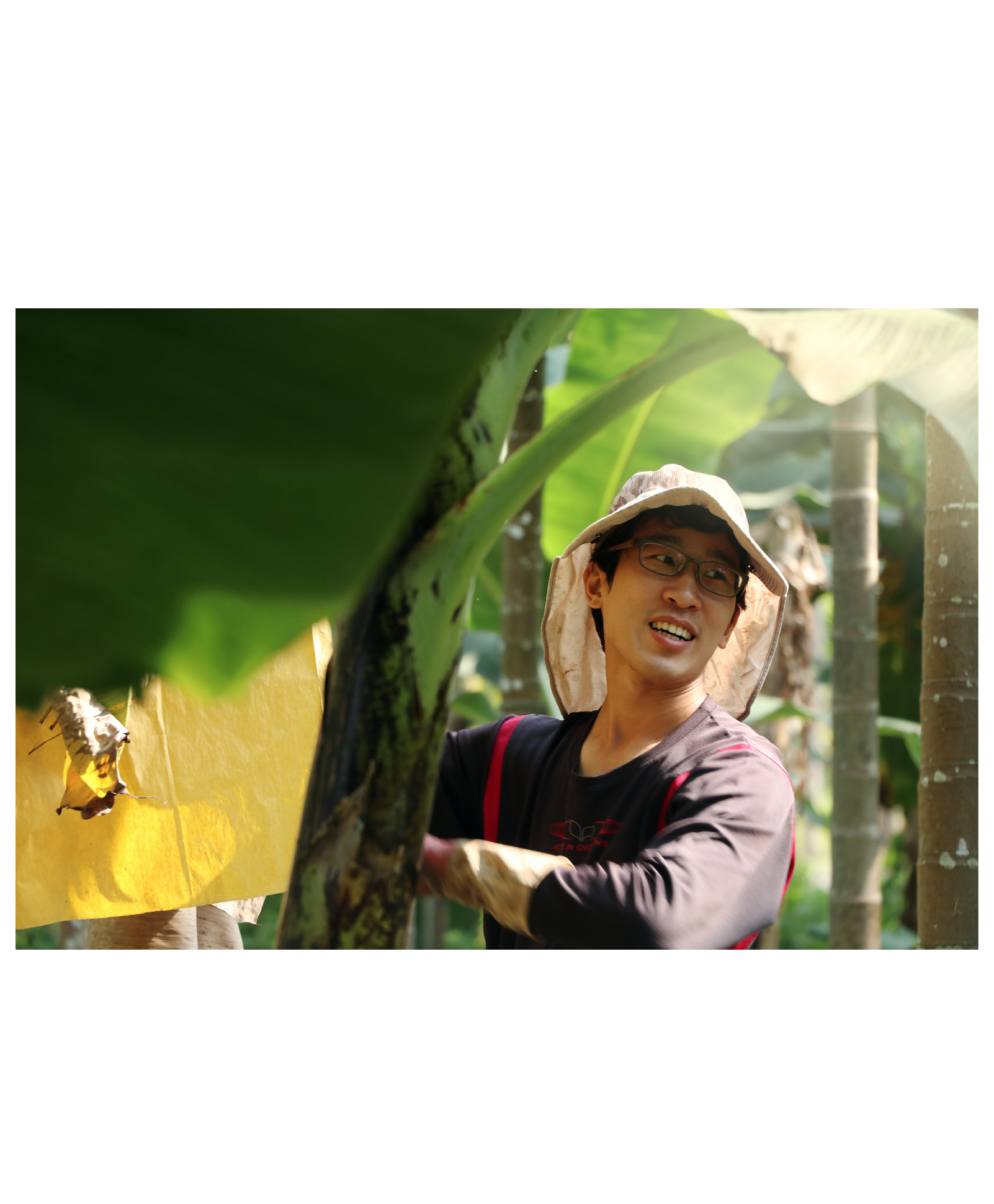
At the end of an overgrown path lies the start of a workday for a young farmer from Pingtung, Mr. Chang Tsung-Ming, born in the 1980s, and his wife.
In their modest banana field, they go through the day’s tasks one by one—wrapping the fruit, handling latex, pruning, weeding, and watering.
"Bananas are like gold," Mr. Chang says, "highly nutritious."
Not only do athletes rely on them for energy, but many people under work stress also choose bananas as a go-to fruit during the day.
To Mr. Chang, bananas are truly “fruits that bring happiness.”
Driven by this passion, he inherited his father’s farmland and transformed it into an organic banana orchard.
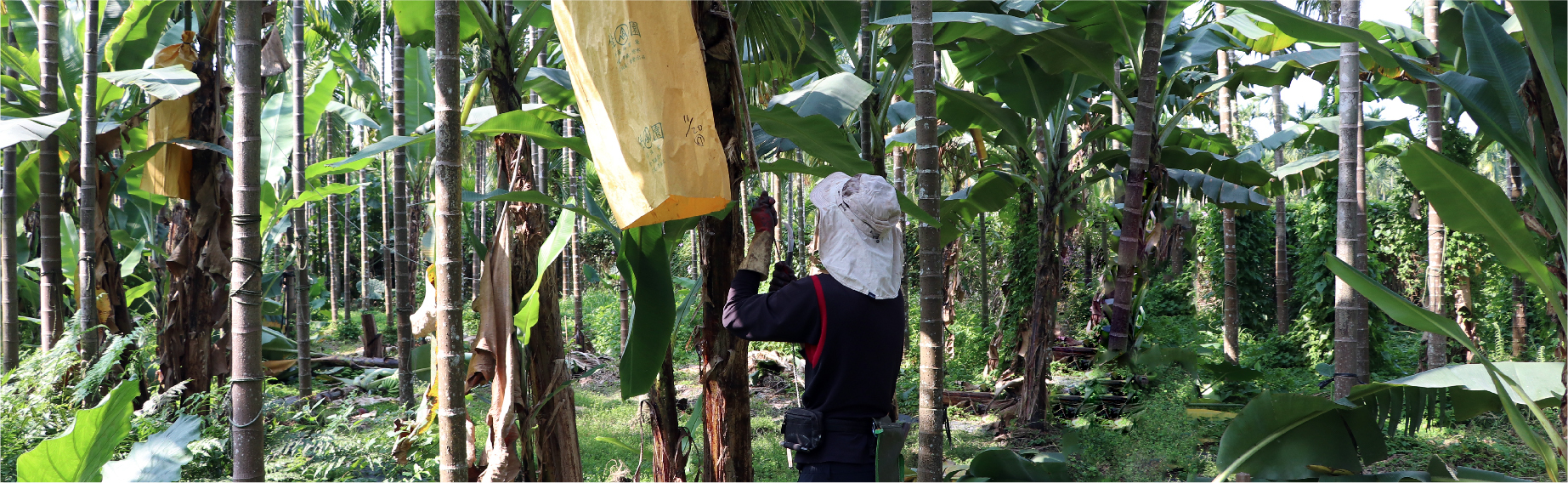
When we visited, the scene felt almost prehistoric, like stepping into Jurassic Park.
Among the banana trees stood tall, oddly placed betel nut trees.
It turns out the land used to be a betel nut grove.
"Banana trees are very sensitive to wind," he explained.
From the perspective of an organic farmer, there was no need to remove the original betel nut trees—they could instead be repurposed as natural support posts for the banana plants.
From the hustle of city food service work, to studying at an agricultural research institute, and finally to becoming a farmer who lives alongside his bananas every day—even through hardship, he says with a smile, "Eat a banana and things get better."
Perhaps he’s right.
His love for bananas shines through when he shares stories about his land and farming knowledge.
There’s joy and fulfillment on his face.
Time seems to slow down here, bringing a sense of ease.
Even when recounting past struggles, his laughter replaces sorrow.
Imperfect Bananas That Can’t Be Sold
"The government buys them for five dollars. The good-looking ones go for processing, but most of the ugly ones are just destroyed—it’s such a waste."
With this one sentence, Mr. Chang reminded us of the news footage showing bananas being discarded by the kilo.
What once felt like a distant headline suddenly became a painful reality before our eyes.
As we walked through the farm, listening to Mr. Chang’s explanations, we learned that growing organic bananas often leads to large quantities of imperfect fruit.
"Bananas secrete latex. If the latex drips onto the peel and isn’t washed off immediately, the skin becomes blemished."
This, along with rain and natural bruising while still on the tree, can create tiny black spots.
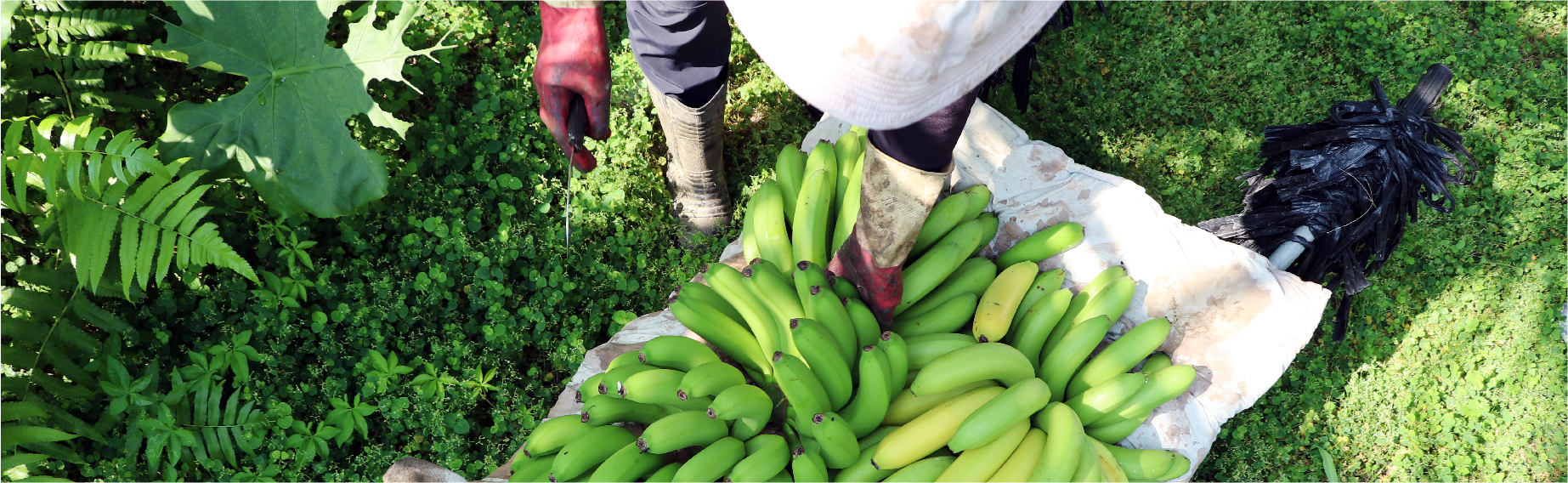
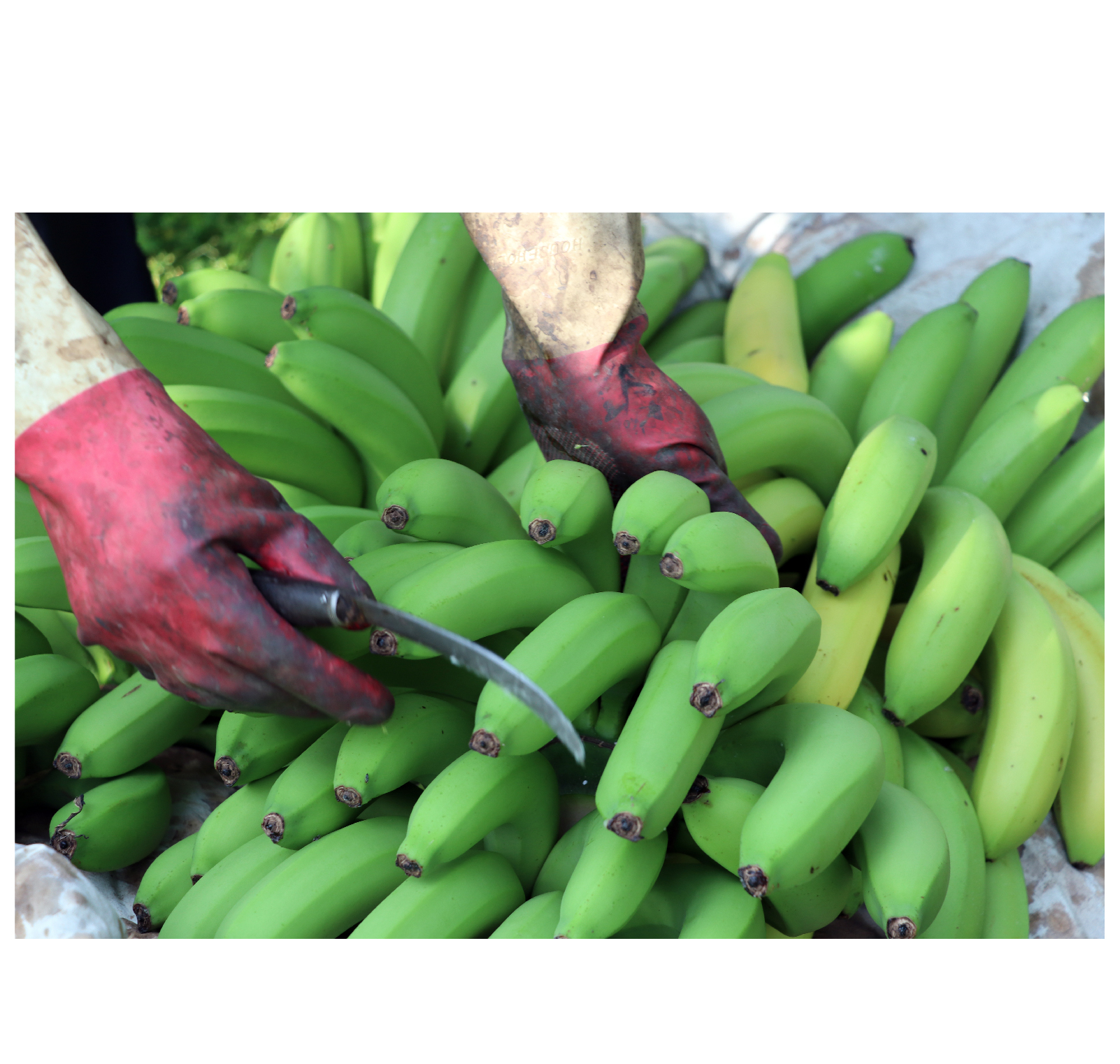
Later, during harvesting and transport, even slight bumps or pressure can leave visible marks on the peel—making them unfit for sale even before they reach the market.
And even when bananas are carefully tended and meet visual standards, they still face another hurdle: size.
"Traders want bunches of around 14 to 16 bananas. Smaller bunches? Nobody wants them."
Even though they taste just as good inside, bananas in smaller bunches are rejected.
Looking at all the bananas with small black spots lying in the truck bed, our hearts grew heavy with mixed emotions.
Finding a Market for Imperfect Bananas
A year into organic banana farming, by chance, Mrs. Chang saw a newspaper article about a chain retailer seeking to expand into the organic market.
“They offered us a place to sell, but it wasn’t as promising as we’d hoped,” she recalled.
At the time, the couple was responsible for everything—from harvesting and inspection, to packaging, delivery, and shelving.
“It was quite tough. The chain store already had its own suppliers, but saw a growing demand for organic produce.”
If the bananas were damaged during transport (from bruising or scraping), or if they simply didn’t sell, that entire batch would yield no income at all.
“When we made a profit, the store took a commission. But when we didn’t, we had to absorb the losses ourselves.”
Though they always seem cheerful, the Changs have clearly weathered some hard times behind the scenes.
Fortunately, Guoyu is now proud to be one of the outlets for Jin You-Ming Organic Farm, entering its second year of partnership.
Thanks to the Changs’ careful cultivation, even the imperfect bananas are no longer wasted—they are transformed into delicious, nutritious, and all-natural banana chips you can enjoy.
If you also value preservative-free dried fruit that’s packed with the essence of the earth, we invite you to continue following the stories of Guoyu and our partner farmers.