{{ 'fb_in_app_browser_popup.desc' | translate }} {{ 'fb_in_app_browser_popup.copy_link' | translate }}

{{ 'in_app_browser_popup.desc' | translate }}

【盛夏補水 生活指南】登山、野餐、郊遊、日常補水首選!

【桂香初綻 八月香濃】專屬優惠來囉!點我看更多!

【官網單筆消費滿 $1500 即享免運!】 【加入會員再享首購禮9折優惠呦!】點我註冊去!

Village Roots Report 01 | Fengyuan, Changhua – Maple Dragon Fruit Orchard

Dragon Fruits and the Masked Palm Civet

Although Fengxiang Orchard is close to human dwellings, many small animals still show up from time to time—venomous snakes, squirrels, and most frequently, the ever-hungry masked palm civet.
“In winter, they eat over a dozen fruits a day—and only pick the best-looking ones!” The orchard owner says with both frustration and amusement. Practicing natural farming for years, Fengxiang Orchard has fruits that split open naturally or bear bite marks—the work of these clever civets.

Active at night and drawn by the sweet aroma of ripe dragon fruit, the civets are surprisingly picky. They sniff out the juiciest fruits, ignoring those knocked to the ground by heavy rain. “They’re not aggressive unless you kick or step on them. During the day, they flee at the slightest disturbance,” says the orchard owner, who, though bothered by these little thieves, sympathizes with them. Some farmers resort to steel traps to deal with civets—often anonymously, so no one can be held accountable. However, he adds, “They’re smart; over time, they learn to avoid the smell of metal.”

Yet it’s not just traps they face. “I once saw a civet gutted and lying by the roadside,” he says bitterly, pointing out that stray dogs, which often attack civets and other wildlife, are also a threat.
In this orchard, which avoids toxic pesticides and minimizes weeding, even the occasional fruit thief—like the civet—is remembered with compassion. For the farmer, this is simply a part of daily life in natural farming.

The Path of a Dragon Fruit Farmer

"Our family used to be in business. Honestly, my dad wasn’t happy about me doing this."
Being a small-scale fruit farmer is a tough and low-profit job—one that most people avoid unless they have a real passion for it. Despite having a background in chemical engineering, this grower chose to become a dragon fruit farmer. His commitment to natural farming stems from his awareness of the harmful effects of chemical herbicides.
"The three essentials of farming are sunlight, air, and water. If nature itself can nurture life, why add fertilizers?" While he understands that traditional farming with fertilizers can yield more, he strives to enhance production through good management practices—without using toxic chemicals.

The journey, however, hasn’t been smooth.
"Traders aren’t like game NPCs. You don’t just grow the crop and get a fixed price." In the beginning, without a solid reputation, he was offered as low as NT$10 per 600g, which left him discouraged.
"It wasn’t what I imagined." He later learned that prices fluctuate by season—during winter, a 500g fruit can fetch premium prices due to low yield, whereas in summer, only fruits over 800g are considered top-grade due to oversupply.

Labor cost is another heavy burden. From flowering, thinning, and bagging to harvesting, every stage requires careful attention. During peak harvest, temporary workers are sometimes needed at NT$1,500 per day, but the work is grueling under the scorching sun, and few are willing.
Even when a few perfect fruits make it past animals, cracking, or blemishes and become elegant gift boxes, the profit is slim. Sometimes, the entire season’s yield can only make a single batch of gift sets.

"Some farmers take out agricultural loans to expand," he says, "But I’m still observing. Every morning when I look at these dragon fruits, I think about expansion—but I don’t know how many years it might take."
Though dragon fruit has a relatively low barrier to entry, making it popular among farmers, this grower admits that as a small-scale natural farmer, he still needs time to understand the market and where he fits in.

The Truth Behind Spots and Small Fruits

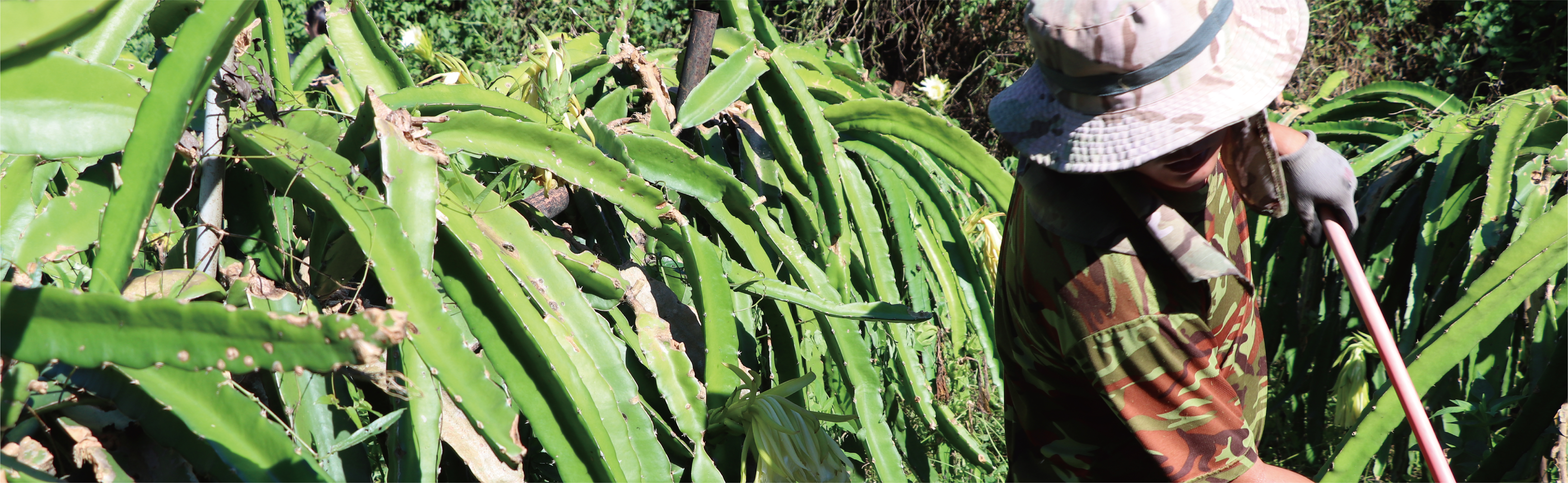
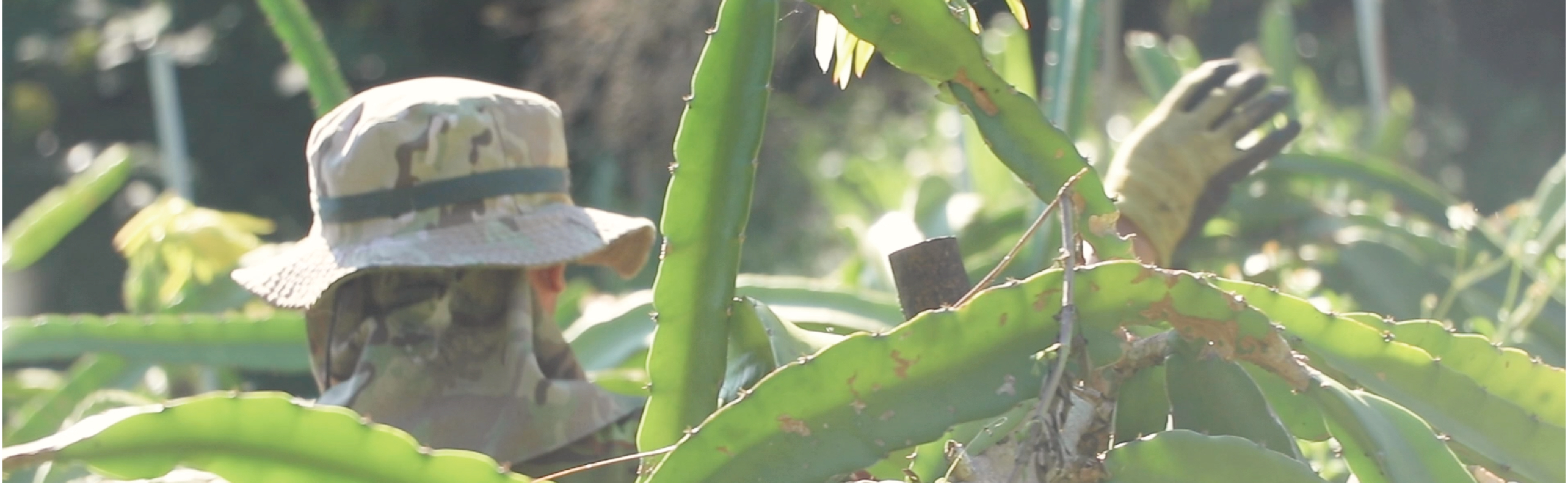
While touring the orchard, the farmer hacked his way through overgrown vines and weeds, clearing the path as he walked.
"A farmer is kind of like the government of this land—we get to decide how to tax it. Like, if I don’t want the grass to grow too tall, I impose a heavy tax—snap—I cut it down, so the nutrients can go to the big businesses: the dragon fruits."
Tall grass can block visibility during harvest, leading to missed fruits and loss. His approach to weeding is practical:
"As long as I can walk through and work easily, there’s no need to pull everything out by the roots."
Though many claim that weeds compete with fruits for nutrients, here, the cut grass decomposes and returns nutrition to the soil—a natural cycle.

Vines serve another purpose too: shade.
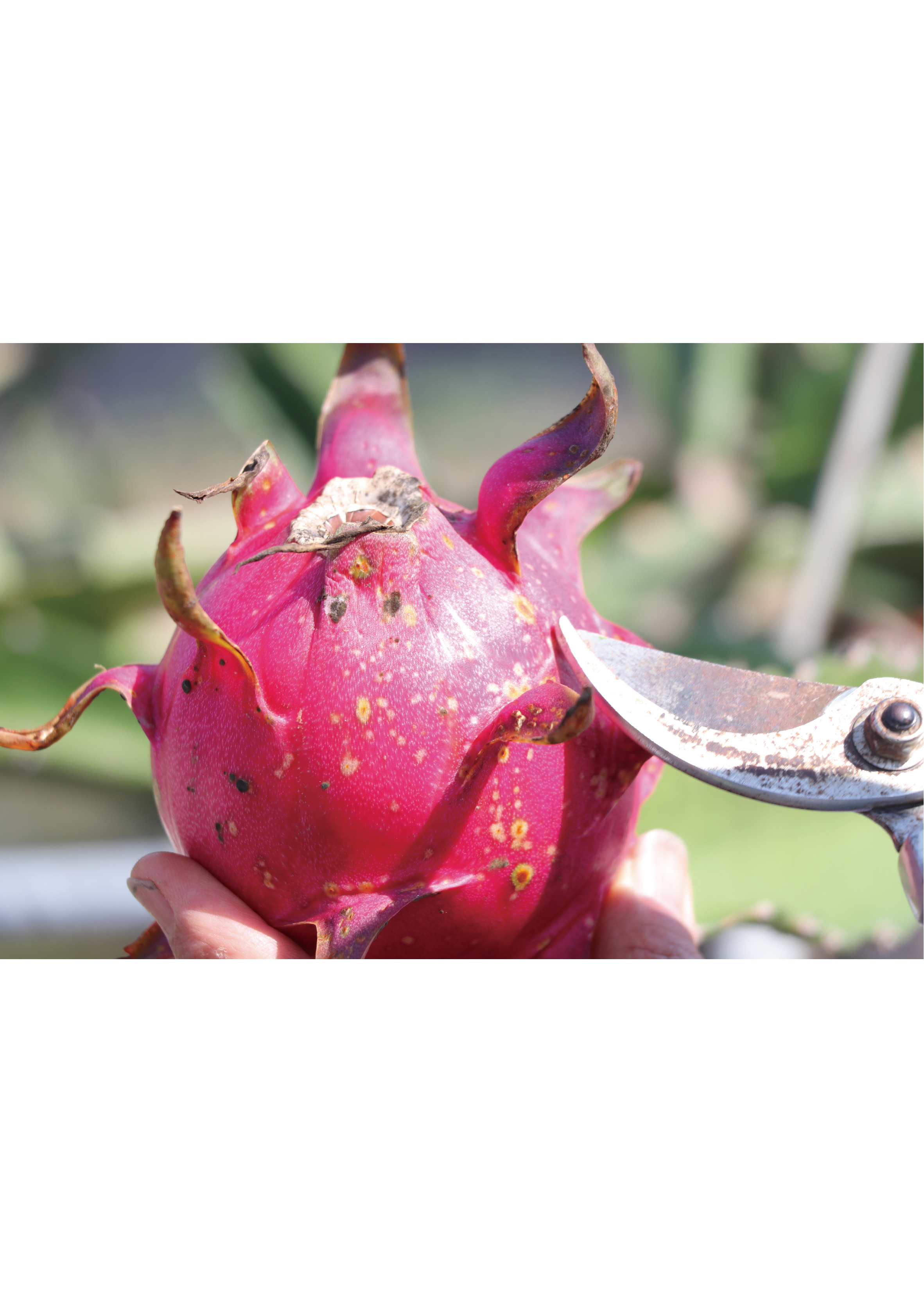
Dragon fruits are sensitive to harsh sunlight. Overexposure can cause "sunspots," much like freckles on human skin. There are also small round yellow spots caused by stem canker disease.
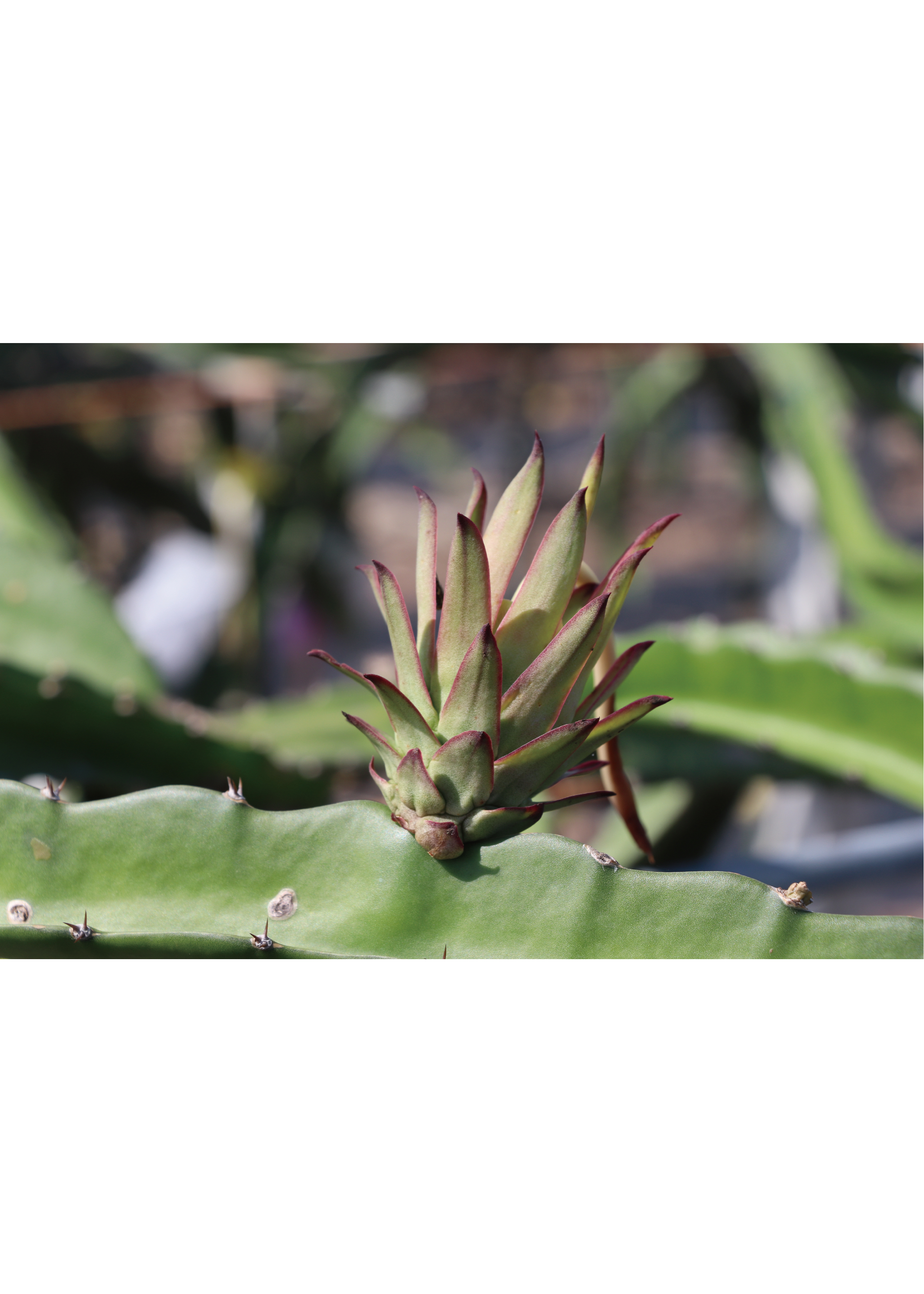
Dragon fruit blooms for only about two weeks, and like the night-blooming cereus, it flowers at night. A few days before the interview, a persistent southwestern front brought heavy rains. Not only were the fruits physically damaged, but the rain also washed away the pollen, leading to poor fertilization and the development of undergrown "small fruits."

Fruits with spots, small size, dull skin, or lacking that perfect reddish glow are not considered fit for gift boxes.
When we asked what proportion of these “imperfect fruits” appear, the farmer surprised us with his answer:
"About half this time."
And yet, many are only dirty on the outside—cut them open and you’ll find sweet, flawless flesh inside.

With natural farming making it difficult to achieve high yields, reducing post-harvest loss remains a constant challenge for small-scale farmers.

The Next Step for a Dragon Fruit Farmer

When we asked the farmer to share his thoughts, he replied with a smile,
"Farming isn’t anything noble—it’s just a way to make a living. The first thing is to not break your own rice bowl. The second is to be as friendly to the environment as possible."

The “imperfect fruits” from Fengxiang Dragon Fruit Orchard, besides being purchased by Guoyu and made into natural, additive-free dried fruit, are also sometimes sold at low prices or given away to nearby residents with peace of mind.

Natural farming is not an easy path, but it isn’t a painful one either.
"Knowing that what you’ve grown is non-toxic, and that it ends up safely in customers’ hands—that’s mission complete for a small farmer."
The process may be tough, but the heart remains at peace and full of joy.

If you, too, hope that the fruit or dried fruit you and your loved ones eat is clean, safe, and nourished by the earth, we invite you to continue following the stories of Guoyu and our small farmers.